donderdag 10 oktober 2013

Summer holiday 2013 part 1: Canyoning in the Sierra de Guara

Even though I still haven't finished my journal of last year's summer holiday (I will, I promise! Better late than never right?!), I thought it was time to record the adventures of this summer. Autumn is starting to take over, but in my head I can sometimes still feel the Mediterranean sun on my skin. Its warmth is slowly fading, but the memories definitely aren't!

Mark and I had two weeks off, the last two weeks of August. The main season is almost over by then (so...not too many noisy tourists, and more important: not too many Dutchies still celebrating their holidays abroad. Seriously, you will run into those 'cheeseheads' at the most obscure places, even though we're from such a tiny country!), but the temperature is still perfect! Our first destination was Sierra de Guara, a sparsely populated area in the north of Spain, just south of the Pyrenees. You can compare the Sierra de Guara a bit with the Grand Canyons in the United States. It is a mountain massif (most of which is part of a national park) with a number of rivers cutting through it. Over time (lóts of time), these rivers have formed spectacular gorges, cracks and canyons through a process called erosion. Which makes this region just perfect for what we came to do: canyoning!

On the French side of the tunnel...foggy, but still dry. 


After a prosperous drive to the south of France, we had to make a decision: stop somewhere, camp for one night and drive the last bit to Lecina (our destination in the Sierra de Guara) the next morning, or keep on driving and arrive at Lecina that same evening. We chose the latter option, everything went so well and quick until then, the sun was still shining and we had enough time left. So it seemed like a sound choice! 
Well, of course we shouldn't have done this. It's probably never wise to drive 1400 kilometers in one day. 
You cross the border between France and Spain by driving through a one-way tunnel, high in the Pyrenees. On the French side it was a bit foggy, but still dry...and on the Spanish side it was literally pouring. Bienvenido a España!

Driving through hairpin bends over small roads (some even unpaved), along deep ravines (which, thank goodness, were pretty much invisible due to the mist and rain) it started to rain even harder. Like I already mentioned before, the Guara is very sparsely populated and some small towns are even completely abandoned, which gave our trip a spooky touch. At one point it was raining so hard that it became impossible to keep on driving. The windscreen wipers did the best they could, but they simply could not equal this amount of water. So we stopped at the side of the road and opened a huge pack of potato chips. 
Because food is always a solution :P.
Marks car got covered with moisture and was filled with the sound of ticking raindrops and cracking paprika chips. Outside it started to get even darker, because the evening was setting in. Yup, we should've stayed on the French side.

A while later, the amount of rain diminished enough to take off again. We continued our way towards Lecina. The number of towns and houses we passed decreased even further, until I seriously started to doubt if we were still on the right track. I believe I even sensed a hint of uncertainty in Marks voice, my never failing navigator. We should really arrive soon now, if we wanted to still be able to put up our tent and maybe find something to eat. At that moment, we were both a bit worried and frustrated, but right now, afterwards, I also kind of love this part of our trip. Thinking back of it fills me with that bittersweet sense of complete desolation and adventure. A feeling I did not often experience so far during my travels in Europe!


The Escalade base camp...by daylight.


Anyway, around 8 in the evening we finally arrived at the camping, which lies pretty much in the middle of nowhere. Exploring the dark, slippery terrain, we found the base camp of our course organization (Escalade) somewhere at the very back end of the camping. Finally, people! Dutch-speaking people! (Seriously, 90% of the Spanish people we met did not seem to speak a word English. And we happen not to speak a word Spanish, besides 'si' and 'ola'.) They were still eating, just starting their desserts. There were some participants of the course of the week before, all of them cozily sitting under canvas covers around wooden camp tables. Mark and I were welcomed at the table of the guides and chief of the camp. One of them introduced us to everyone, but it was too dark to really distinguish any faces (so the next morning everyone had to be introduced again). We were lucky, the cook of the camp told us she had some leftovers of their diner! It's a good thing it was so dark we couldn't see what we were eating, because - even though we were very hungry - we both thought it was, eehm..well, let's say 'a very special meal'. I don't mean to be unthankful, we were happy to have our stomaches filled again. I just hope I won't ever have to eat that 'special meal' again, whatever it might have been. 


After diner we went back to our camping field, trying to find a fairly dry spot. Which was impossible of course, it was still raining steadily. So we ended up building our 'emergency tent' (a small one, that we only brought for staying the night along the road) out of the car. Eehm...yeah, how should I explain this... We sat ín the car, with one window just a little bit down. Mark put the frame of the tent together and shoved it out through the window opening, while I was acting pretty useless and filming him with my phone, because it all seemed just so hilarious and terrible at the same time.  In the end, we had a tent. A wet tent, with wet bedsheets and wet not-so-happy campers. All we could come up with at that point, was to run to the camping bar and settle down for Bailey's. The bartender must have seen I needed it, because he gave me a double portion.


Mark building the tent, while our bedclothes were drying in the sun
(including my teddybear :P )


The next morning we woke on the hard ground. Because why should our air-mattress stay filled with air when all other things went wrong anyway? Oh well...it was a new day, and the sun was shining. So we crawled out of our wet tent and sat down to cook water for coffee. Priorities first, and I think we deserved it! It took like forever before the water finally boiled on our small camping stove, Mark almost started showing withdrawal symptoms. Luckily we only had to do this ourselves that one morning. The canyoning-course was all-inclusive (breakfast, lunch and dinner...and coffee), and would officially start that same day in the afternoon. So we had plenty of time left to set up our real tent and make ourselves a little home for the coming week! I left this task to Mark, while I broke down our emergency tent and laid everything to dry in the sun. We met our neighbors the evening before already; a very kind German couple who also came for an Escalade (canyoning) course, only a more advanced one. That morning another attendee arrived, who would be in our own course group. He set up his tent besides ours, and so our camping field became cozy and dry in that saturday-morning sunshine.


In the afternoon our course officially began. Now let me start with explaining a bit about canyoning, and about why we chose to do this for our holiday. Canyoning (or canyoneering, as it's called in the US) is traveling in a canyon (following its course) using a variety of techniques, like abseiling, ropework, and technical swims, climbs and jumps. I took this definition from the wikipedia-page about canyoning, which I actually found pretty accurate, comparing it to what I've learned so far. So, if you're interested: read on over there! Why did we choose this kind of holiday? Canyoning is kind of related to climbing. You use a lot of the same techniques, especially when it comes to the ropes, belaying and abseiling. So with that in mind, we hoped to expand our knowledge on gear and ropework, but also on subjects like the weather, geology, etc. All those things are equally important to climbers as well as canyoneers! In other aspects, climbing and canyoning are also completely different though. The water adds a whole new dimension, and  canyoning (especially when you compare it with single pitch sport climbing) needs a lot more preparing and planning beforehand. We were just curious to see how we'd like this! And so our canyoning adventure began :)


The Rio Vero.


We met a couple more course attendants, though luckily the groups were quite small. It was the last week of the season for Escalade, so we were their very last course-group! All other attendants were male, but thankfully there was one other girl in camp: the girlfriend of the chief of Escalade, who was a guide as well.
We decided to go to the 'Basender' that afternoon. Our camping was located on the Rio Vero, one of the rivers flowing through the Sierra de Guara. Actually it's not much of a river these days anymore, rather a shallow stream. But a long time ago, the Vero must have been a strong flood, because it formed a deep gorge with several side branches. Its walls are high (around 800 meter), with lots of holes and little caves in it (typical for limestone). The Basender canyon is one of those side branches I mentioned, ending in the Rio Vero. From our camping, it took about 45 minutes to get to the start of this canyon, most of which involved climbing. This is inevitable, because with canyoning you always descend, following the river or river bed from its highest point to where it ends in the final current (in this case, the Rio Vero). This is not how it has always been though, by the way! In the earliest days of canyoning, brave men tried to defeat the canyon uphill, against the current (why, oh why?!)! 


Carrying boats upwards ladders...great idea guys.


The Basender is now a so-called dry canyon, there's no stream of water in it anymore (though I believe it still happens to become filled with water again when it's the rainy season). This meant that it's a perfect canyon to practice abseiling and rope techniques, without having to worry about the water-aspect yet. In the next picture you can see a typical canyon-topo: a little map that shows the process of the canyon, including all rappels or abseils (stated with R's, the height of the abseil next to it in meters), typical landmarks and other information. As you can see, the Basender doesn't have very high abseils and is a real beginners-canyon. One shouldn't think of it as a inferior canyon though, because it's also a very beautiful canyon with lots of so-called halls (open cave-like spaces) and stunning geological structures and formations. Our first encounter with a real canyon could definitely have been worse! Although we did not yet have to worry about the specific techniques of abseiling, ropework and belaying during this first day (the guide did all this technical work, we only had to enjoy and admire), we already found out that a lot of techniques were familiar to us, similar to what we do when climbing. We were ready for more!


I will make a little day-to-day list and try to give a short(?) summary of what we did on that specific course day, to provide you with a clear overview and spare my dear readers the (maybe very boring) details :)

Sunday: we did the Basender once again, only this time we had to execute a lot of the techniques by ourselves, after they were explained to us in the base camp. Did I also already tell you about the camp dog, Boef (belonging to the chief and his girlfriend)? He was a very enthusiastic young sheep-dog, crazy for balls and flashlights. He came with us this day to the Basender, with his own little harness for abseiling! Such a shame I don't have a picture of this :)


Filling our water bottles at a natural spring in the Rio Vero.


Monday: we started with more theory lessons. We practiced a lot of knots and how to build a variable abseil, and learned a bit more about necessary materials. In the afternoon, we had to show our newly obtained skills in the Portiacha canyon, another side branch of the Rio Vero. This canyon had some higher abseils (31 and 35 meters), that were really exciting! In the evening, we made plans and preparations for the big canyon we would do on tuesday.


Me abseiling in the Portiacha canyon.


Tuesday: on this day we probably did the most exciting canyon of the whole week: the 'Foz de la Canal'. This canyon, about an hour drive away from the camping, was our first canyon wíth water (and oh my goodness, it was cold!) Absolute climax was its 70 meter free abseil insíde a waterfall. I will not forget that moment, standing on what felt like the top of the world, looking down over the edge, seeing the waterfall disappear into a small current somewhere deep down under me...and then letting myself slide down the rope right into that mighty falling mass of water. It clanked onto my helmet, the 70 meter wet rope was heavy to put through my belay device...it was hard work, but totally awesome. Oh yes!


The 70 meter waterfall/abseil in the
Foz de la Canal canyon.


Wednesday: time to relax a bit after our heavy day before, so we started with more theory lessons about weather, geology and safety. In the afternoon, we got the directions to another side branch of the Rio Vero and were sent away on our own, towards this 'mystery canyon'. Our assignment was to draw our own map/topo of this (dry) canyon, and compare it afterwards with the real one. It was a fun task, giving even more insight in the specific topography related to canyoning.


Thursday: today we did the Liri canyon (another one with water), on about 1,5 hour driving from the camping. The furthest away so far, and of course the one on which our car stopped working. I'll get back to that later, in part 2 of this summer holiday journal. The Liri was comparable to the Foz the la Canal, only without that superhigh abseil. It did had a lot of smaller abseils though (12, I believe), so plenty of opportunities to practice and get a bit more accustomed to quickly setting up and taking down abseils. We still lacked a bit of speed in those parts, which is definitely necessary if you want to do longer canyons (and get out before dark :P). The Liri also containt some nice jumps and natural water slides, which are fun! 


Happy Mark. I love seeing that smile so much :)


Friday: on this last day we did our least scary/exciting canyon, but also the most beautiful one. It was the Rio Vero canyon, which contains a lót of water. So plenty of swimming was involved, following the stream through cave systems, small tunnels and rock parties. The Rio Vero canyon doesn't contain any abseils, but it's neither a very simple, danger-free canyon. Every year a couple of accidents happen here, because water can do crazy things in caves and holes. For example there are syphons, gaps between underwater boulders. These gaps can create strong currents that can suck body parts in, trapping people underwater. Mark almost fell into one of those, and scared the hell out of me. Never do that again mister! There was also a sump (underwater passage), and some secret pathways that were pointed out to us by our guide (making us follow routes we otherwise would have never dared!). The Rio Vero canyon ended near Alquezar, a historic town around a medieval castle. Here we settled down for some well-deserved cold beers, before the taxi came to pick us up.


The pics of Marks waterproof cam turned out quite blurry, but this was
inside the Rio Vero canyon.


So...did we like our week of canyoning? My first answer is a definite YES! We had an awesome week that I wouldn't have missed. Of course we had our lower moments and frustrations, but overall it was a wonderful, adventurous and challenging experience. I'd like to add some pro's and con's though, just to make my point :)

Pros:
  • Canyoning means awesome surroundings. Period. You will reach places that are otherwise impossible to reach, finding treasures that mother nature has hidden very well. The geological structures, rock formations, different kinds of colors and caves you get to see are simply breathtaking.


  • Canyoning is quite adventurous. It's more adventure than sport, actually (although the more difficult canyons require an excellent physical condition and perfect knowledge of techniques, material and rescue possibilities). It also requires a lot of preparation beforehand. You really have to sit down and make a plan. Make note of the time you need to get to the starting point of the canyon (which can reach up to several hours!), how long you will be inside the canyon and how much time is required to get back to your car afterwards. You have to take note of the weather, and its consequences for the canyon, especially when it's a water canyon. Rain can mean flooding, or even result in dangerous flash floods! You have to take note of the abseils, and how long they are. This will help you decide what materials you will need, how long your ropes have to be, etc. Besides this, you will have to prepare what you will take with you in your special canyoning backpacks. Besides ropes (which already weigh heavy enough), you want to bring as little as possible. You at least need a rescue set though, and when you will be in the canyon for, say, six hours...you might need some food too (oh..and coffee? Maybe? No..?). Well, you get the idea. Traveling through a canyon isn't something you undertake without preparation.

Landing on the ground, freeing myself of the rope. 


Cons:
  • The water is cold. I mean, seriously, freezing, terrifying cold. After all, it's melting water. So even during summer it's still not comparable to the water you normally swim in outside. I am probably not someone who can stand cold very well, and having my period on the first day we went to a wet canyon might neither have helped. That very moment I jumped in the first deep pole, wearing a wetsuit that was a little bit too big (allowing the water to flow in way too much and quickly), my stomach cramped together and the coldness literally hurt. After a while, you'll get used to it. Getting a smaller, better fitting suit the next day also helped a bit, but still I had my moments where I was wondering if this terrible cold was really worth it. Of course you will never have perfectly fitting gear when it's provided by the course organization. It might be possible to solve this problem by buying a very good neoprene suit that fits me perfectly and is also thick enough...but that brings me to the next con:
  • The materials you need to go canyoning yourself are expensive. Reaaally expensive. We actually hoped we could use some of our climbing gear, but it turns out most comparable materials differ a tiny bit from each other and can't be used for both purposes. Climbing gear normally isn't 100% waterproof (doesn't have to be, so why make it more expensive?). Climbing ropes are dynamic, having a certain stretch (so falls won't be too static). Canyoning ropes on the other hand, have to absorb the water very well, and are more or less static. You will only be abseiling on them and don't need to take falls. These are just a few examples of a lot of subtle (but important) differences between climbing and abseiling stuff. So, if we want to proceed with this newfound activity, we will have to invest in new materials and gear...not something you decide on overnight!
You surely want to know you can trust your gear!


  • To get to the starting point of a canyon, you sometimes have to walk/ascend for a long time. Of course this is part of the adventure, and the route often goes through beautiful scenery. A canyon can really start in the middle of nowhere, far away from civilization or roads! But well, if we wanted to go hiking, we would've chosen another holiday. In this situation, it's just something that's necessary to get to the point where you can begin with what you actually came for: descending the canyon. The fact that the route towards a canyon can take up to 6 hours, resulting in being tired of climbing all those hours before you even start canyoning, can be a little bit annoying. For the Foz de la Canal we had to ascend 500 meters in altitude, which was normally done in 1 hour (already pretty fast!). The macho men in my group though thought it was necessary to show off and do it in 45 minutes, with me trying not to loose them or keep them down. Seriously guys, was that really called for?! Pff, men...:P
Minutes before that terrifying 45 minutes of ascending.
Look at those macho men!


To summarize it, canyoning is definitely super duper awesome, but it also takes time, energy and money. It's not the easiest activity to undertake, but the trouble you will go through beforehand will be paid back for once inside the canyon. And don't forget the ultimate feeling of reward and satisfaction when you're finished, relaxing with a cold beer, evaluating the exciting, difficult or beautiful moments you just had and going through the pictures you took with your go-cam.

I'm a bit jealous of the German couple, who took the advanced course as I mentioned earlier in this journal. Their last day of canyoning was quite special, also for the guides who came with them. They traveled towards the canyon on the evening before, sleeping in a mountain hut (with only their neoprene suits with them, because you can't take any clothes with you in the canyon!). The next morning they had to rise incredibly early to ascend (by foot) to an altitude of 2500 meters, where their starting point was. Can you imagine the temperature (of the air as well as the water!) on that height? They would be inside this very difficult, technical canyon for about 14(!!!) hours, which meant they had to hurry and keep going if they wanted to get out before dark. So, a bit of pressure was involved. Afterwards one of the guides who went with them showed us pictures and movies he took with his waterproof cam. There was a lót of water, strong currents, crazy water slides and waterfalls. They were all extremely tired, and satisfied. Now thát is the kind of adventure you can undertake when going on with canyoning and proceed to learn the necessary knowledge and skills. Kind of promising, and attracting...


I do hope we will pick up canyoning at one point again. I don't know when and I don't know where, but I'd love to do it again.

Well, that was the first part of my summer holiday journal! I hope to write the second part soon, in which I will tell about the broken car adventures, and our second week in France, where we went for rock climbing (which is the wrong sequence, we found out. After canyoning all the callus on your fingers will be gone...and hell that hurts!). If you have any questions or comments so far, please feel free to let me know!

donderdag 19 september 2013

It's dyeing day!

Last weekend it was time for another Wool Wench workshop! A little less then a year ago I visited Suzy's 'Find your inner yarn hero' day, which was pretty awesome and useful. This September she organized a new creative meet-up with some fellow fiber lovers, to focus on dyeing techniques this time. I did some experimenting with dyeing fibers myself before (mostly using Kool-Aid), but never worked with chemical dyes so far. I always drool over all kinds of pretty fibers, rovings and yarns in the yummiest color combinations you can imagine. Being able to actually create those mysélf would be a creative dream come true!

By the way...I've been thinking about how crazy it sounds when you say 'I'm going to a dyeing workshop today'. C'mon, say it out loud. Get it? There might be plenty of odd sayings that only make sense to fiber lovers, but this must surely be the most macabre one. No worries though, we had a wonderful and 'lively' day together!

Suzy's collection of dyes, ready to be used by us.


Arriving at Suzy's home I was greeted by her 5 year old son, who immediately started showing me his complete collection of superhero lego figures. I was a complete noob when it comes to superheroes, but I'm totally updated now. Chima-characters, Iron man, every possible villain...you name it, I met them all! Actually this little fella entrusted me with the fact that he is turning into the Hulk himself. He already spotted some green patches on the skin of his hands... Good luck with that Suzy!

Soon my bestie Eef and the two other participants arrived as well, and after providing everyone of big cups of coffee, we took place at the kitchen table and Suzy started explaining some stuff about mixing colors, color wheels and color schemes. We all got a big empty piece of paper ahead of us, ready to be practiced on. Everyone took a pencil and started working...we were all super concentrated, it's funny how all color wheels turned out so differently from each other even though we got the same assignment! We could also already experiment a bit with the colors we might want to use later on the roving. This 'try out' beforehand can be quite useful to get a good idea of how specific colors mix up, blend and work together.

The 'easy peasy' dyeing method in sealable plastic bags.


After working on our paper 'inspiration boards' for a little while, it was time to start with the actual dyeing. Suzy had 100 grams of superwash merino roving ready for each one of us, and showed us the easiest way to dye such a piece of fiber: a quick and not-so-messy method using a sealable plastic bag, in which you gently pour your dye. Still a bit scared most of us used some 'safe' color combinations, carefully trying to do exactly as Suzy was telling us. The plastic bags were sealed and put in a pot with hot (but not boiling) water, for the color to set in.

Meanwhile Suzy proceeded to teach us more hand dyeing techniques, in which we also gained a bit more control over the actual process. Slowly we became braver, using more contrasting colors and going a bit more crazy every time. This is actually the fun part of dyeing: going wild, experimenting and trying out new things. You'll almost never really know how it'll turn out! It depends on the dye, the fiber, the heat, the amount of water and vinegar and probably even more things I don't know about (when you think about it, dyeing fibers is totally about chemistry! Chemical reactions happening all over the place...) When dyeing roving, it will be a surprise how it will look when it comes out pot, and then it will be a surprise agáin what it will look like when spun up!

In the pot...keeping it hot!


Most of the participants also took some undyed (homespun) yarn with them. Dyeing finished yarn is in one way pretty much the same as dyeing roving...but on the other hand, the final look is completely different. It just depends on what you're going for! I really liked this part of the day, because I love the look of hand dyed yarns a lot, especially the beautiful gradients they often show. For one of my yarns I really had a 'plan', I even pre-made the color scheme I wanted to use on my inspiration paper. The scheme was based on the beach: sandy colors combined with the different tones of the ocean. Suzy happened to have the perfect colors for this idea and the final result came out just as I hoped. For the other two yarns I just tried things out (although I actually hoped to make a yarn with lots of blank spots in it, I love those! It was way harder than I thought to back down on the dyeing :P). For my 2-ply merino I picked colors I normally wouldn't choose, and this specific yarn was quite a favorite among the final results! Never stick to your safe habits ;)

A basket of rainbows!


Somewhere halfway the day Suzy served us a nice lunch with delightful quiches, while her little 'Hulk' kept on showing us his very best superhero moves, kicks and jumps and told a silly story about a guy who's bum cracked up and who had to pick a new one (huh?!). Plenty of extra amusement for sure!
When the yarns and rovings stayed in the pot long enough, the most fun part of the day began: getting them out of the pot (hot hot hot!), rinse, wash and dry them, and...hang them al together on the drying rack. This rack slowly became a rainbow of colors in Suzy's kitchen, while we were all standing around it, awing like we were looking at a holy grail. One 'ooooh' followed the other 'aaaah', when another finished yarn or roving was added to the rack. Wow!

The drying rack, filled with our results of the day.


I surely learnt a lot about dyeing this day, although I also realize we only focused on one way of coloring yarn and roving, which Suzy simply called 'hand dyeing'. Other methods are for example dip dyeing, kettle dyeing, tie dyeing, etc. There are so many more possibilities to explore! But, today's method is a good basis, it gives the dyer a lot of control over the final results and is not too difficult to execute. Eef and I already made plans on buying ourselves some chemical dyes and organizing some experimental afternoons. I can't wait to try out more color combinations! I had fun naming the yarns I dyed during the workshop, heheh! Glacier Tales, Strawberry Lemonade and A Day at the Beach...you think they're suitable?! I decided to put them in my shop (I'm not able to knit/crochet évery yarn I make...even though I wish I could!). Go take a look if you're interested!

My own results! The 3 yarns on the left are available at my Etsy shop :)


Thank you Suzy for this nice day and for sharing your knowledge with us. I am inspired by al the pretty yarns that are hanging around in your house...it's like walking in a fiber enthusiastic's museum :) Keep up the good work!

dinsdag 10 september 2013

Handspun for me!

Lately I realized I never really made something for mé with a yarn I spun myself. Most times I put them in my Etsy shop, while scraps and leftovers are used for dolly hats and beanies. So...wasn't it time to try out some of my handspun for myself? Actually, putting it that way...using my own yarn might even give me some useful information on how I can improve their usability!

Being a real lover of scarves and cowls, the decision for a neckwear piece was quickly made. A little while ago I already made a little girl's cowl with super bulky thick-and-thin thread, so this time I wanted to go for a thinner yarn to work with. It would again be a knitting project though, just so I'd get more practice (my crochet skills are way better!). I am really fond of the look of single yarns for projects like these, but I knew that wasn't the easiest way to go. Every spinner knows that it's not easy to get a single, non-plied yarn balanced (for non-spinners: this means that the yarn doesn't twist around itself anymore). And working with an unbalanced yarn means trouble! Your final work will crook and twist, it's impossible to make it equal and straight if your thread is not balanced. But, again...creating a balanced single yarn is quite a challenge!


To make a long story short: this project was an excellent chance for me to get more experienced with single yarns and setting their twist. I learnt new techniques like using steam and even smacking! (Imagine a girl smacking a hank of yarn against the floor like crazy and now try to convince yourself she's not a lunatic...even my cats looked quite astonished :P). Since my plan was to make a loose cowl that could also be worn during the colder summer days, I wanted to go with a bright color. I ended up with Bonfiber's "Pretty in Peach", it actually was exactly what I was looking for! I ordered 6.5 oz and used all of that for this project. 


I also ordered new circular needles, since I grew sick of my old cheap ones and also needed a longer string. I picked the KnitPro Nova needles (4.50mm), and did not regret my choice. In fact, I even already ordered more of this series...they knit so smoothly! Finally, I also used some blank, undyed merino roving, I think about 0.5 oz. So...for anyone who feels inspired by this project and would like to make something similar, here's a little necessities list:

- 6.5 oz (superwash) merino roving in any color you'd like
- 0.5 oz (superwash) merino roving, undyed
- circular knitting needles, about 4.50mm (depending on your preferences), at least 80 cm string
- spinning wheel (duh!)

I spun quite an even single, though I did intentionally put in some thinner and thicker parts to get a nice structure in my final project. I set the twist using different methods. I'm not gonna describe them extensively here now, I still have way too much to learn on this area! Maybe one day I'll feel experienced enough to write a blogpost about balancing yarns...in, like, a hundred years or so :P Anyway, there are plenty of good advices, video's and tutorials on the Internet, so just google ahead!


I wound my newspun yarn in two balls: a big peachy ball and a small blank ball. I casted on the amount of stitches I thought I would need for a loose cowl, and knitted one row with the undyed yarn. Then I switched to the peachy yarn and knitted 10 rows. After every 10 rows, I'd do a blank row again, until my cowl was big enough and my yarn was all used up. Simple as that! Of course you don't have to do a blank row after every 10 colored rows...it's whatever you prefer, I just thought it would make a nice variation!

Since this project was so super easy (only knits, round after round after round), I think every amateur knitter can make it. Even if you don't spin your own yarn, you can order a similar thread (go support all the indie spinners on Etsy and buy one of their special handspun yarns to show off in your project!) and work on this cowl while watching tv, sitting in the car, or on the train...it needs no counting or extreme attention, it'll just give your hands something to do!


After finishing my cowl, I noticed it had become a bit fuzzed. This was probably the result of often bringing the work-in-progress with me in my bag and having it in my hands over and over again. To solve this, I asked my mom to bring her fabric shaver over. It was the first time I used this thing, and I was actually pretty careful at the beginning, not sure if I would harm the yarn. But, it worked like a charm! Those fabric shavers are also known as lint/fuzz/pill removers. I'm afraid my mom won't get hers back soon, I've used it a lot after discovering it's usefulness!

My cowl ended up loose enough to be worn during Spring or cold Summer days. I'm pretty happy with how it turned out, I think it makes a colorful and comfy accessory, and having made it myself gives it an extra special feeling. Feel inspired? Go ahead and use this post as a guideline for your own next knitting project, if you like! I'd love it if you'd let me know...any thoughts, comments and advices are welcome!


dinsdag 13 augustus 2013

A musical giraffe & two love birds

During the last months I was asked by several people to make something for a special event. I felt quite honored, being commissioned by these friends to add a creative touch to their upcoming memorable happenings!

The musical giraffe

Let's start with the giraffe. This one was made for my colleague Nicolle, who got pregnant at the end of 2012. Not long after she announced it at work, she asked me if I could make something to put a little music box in. Well, sure...I told her it depended a bit on what she wanted. Not being sure yet, we went from stars and clouds to ducks. I directed her to Pinterest, not knowing that the overwhelming amount of baby-related inspiration this place contains would only make her choice more difficult. But finally a decision was made: a crocheted giraffe it would be!


I told Nicolle to pick a pattern she liked from Etsy (I might be crafty, but designing my own giraffe crochet pattern is a step too far), she came back with Daveydreamer's 'Girard the Giraffe'. Cute huh? (I also really love the undersea patterns in this shop by the way! Just look at that squid, the clam, the walrus...and the wanatee! I don't even know what a wanatee is, but it totally rocks big time!). During a free hour at work I dragged a big-bellied Nicolle to the yarn shop, so she could choose the colors for this creature. We assumed the pattern would be for quite a small giraffe (most amigurumi's are tiny), so we decided to go for a thicker, bulkier yarn. The giraffe had to hold the music box in his belly in the end, so a teeny tiny animal would not work! But, as it turned out...we shouldn't have done this. Just look at the picture above, the giraffe became gigantic! This might be my own fault though...I probably skipped some information on the pattern about the size and such, you know, the boring stuff...oops!


The baby was born a month early (first time in my life I actually felt pressured by a newborn...I wasn't nearly finished yet!). Of course Roos (which is Dutch for 'rose') was a very small baby in the beginning, and as I said, my giraffe became a giant. Nicolle thought he was becoming adorable, but I had my doubts. What about Roos? Imaging being a tiny baby, lying in your carrier, sucking your pacifier...just generally chilling out for a bit. Suddenly someone puts a life-sized giraffe (a giráffe, for heavens sake!) on your lap, freakishly wobbling it's head from side to side, pushing its face in yours while talking 'baby' ("oooh gutchee gutchee!"). All I can say is: I just hope this child won't have a life long phobia of giraffes.

The giraffe took me quite some hours, I even worked on it in the car on our way to the Ardennes for our climbing weekends (remember?). I had some trouble with keeping the neck up (the head is quite heavy), so I shoved some thin iron wires in it. Roos' parents might have to remove those if she ever overcomes her trauma and ends up wanting to play with her giraffe. For the rest the pattern was super clear and easy to follow. The music box easily fitted in the giraffe's belly. After putting it in, I just kept on decreasing to close the body, until nothing more than a miniature hole was left, where the drawstring of the music box went out. I loved the song it played by the way! I must admit I regularly pulled the cord during my crochet hours...it's not one of those standard baby tunes. I hope Roos will grow to love it as well!

Last week I finally found a chance to actually visit Roos and her parents and to hand over their gift. It was awesome to see how happy they were with the giraffe and how much they liked how it turned out. Roos had already grown a bit (which might come in handy, regarding the phobia thing...she's slightly bigger than our long necked friend now) and seemed like a healthy and happy baby. I hope the lullabying giraffe will guide her into many hours of quiet and peaceful sleep (so her parents will get some rest as well ;))!

Hmm...still a bit phobic?

Two love birds

Now on to the other project: two love birds (or robins, more precisely)! These were made for Marijke, one of my very best friends. Thinking about it, I actually believe it's already more than 7 years ago when we first met as two shy and vulnerable young ladies on a new journey. We clung on to each other to find some comfort, understanding and humor during that particular overwhelming time in our lives. And we sticked together! Not so shy and vulnerable anymore (I believe we actually grew some balls :P), but still finding comfort in understanding the other so well and having minds that function scarily alike. With Marijke I only need a couple of words and she will get exactly how I feel. With others, even thousands of words are still not sufficient to explain what's going on inside our sensitive silly brains...so you can imagine how precious this friendship is to me!

Marijke got married to Lennard last summer. She fell in love with this awesome (I don't even know him that well, but everyone who makes Marijke thát happy is awesome) young lad a while ago, and it wasn't long before they decided this was for real and they wanted to spend the rest of their lives together. So why wait then? It might seem quick for outsiders, but I happen to totally trust their decision on this one. Some things are just right and carry blessings from above. 
Not long after this decision Marijke asked me if I could crochet something that could work as a cake topper. To me this sounded like the perfect chance to actually give them something meaningful. A bought gift just seemed too easy for such a good friend. A crochet project would require hours of work, some real effort and dedication...which they totally deserve!

At first we brainstormed about a tiny wedding couple (a small bride and groom), but this is quite difficult to crochet (though it can be done!). Marijke really loves birds, especially the small domestic ones...so we decided that 'love birds' would be a way better idea! Those could also function as a nice decoration piece áfter the wedding (while a wedding pair might be a bit too...well...wedding-ish to put on the shelf). Marijke picked MysteriousCats' robin pattern on Etsy (this lady has a lot of other cute patterns as well! But what the héck is that horror postcard of a vampire cat doing in her shop?!), which I made twice. I added the hat, bow, hearts and rings (those are not part of the pattern) and searched for the perfect branch to put them on (which was a bit more difficult than I thought...next time get married in autumn, okay guys?). 

Marijke loved how her caketopper turned out, and it fitted perfectly well on their pie (which looks soooo yummie by the way!). She and Lennard married in a wonderful kind of circus tent with old wooden wainscots and mirrors and such...beyond awesome! Look at what a pretty couple they make together, and how lovely they look in their dress and suit. There was a beautiful wedding service (with quite some tears), campfires, an instax photo boot and lots of other cool stuff. Oh, and did I mention that Marijke promised Lennard in her vows that she will make him homemade apple pie évery weekend? Crazy, and so sweet! 

Right now they're already married for a couple of months. They expanded their little family with Ted, a tiny plushy rabbit that Lennard bought as a gift for Marijke. Trying to find their way into living together as a couple, they make an awesome pair. I love how Marijke explained it to me: "We're actually just two little kids, pretending to maintain a household..." hahaha! Humor and a lot of mutual love will get them through. I know the birdies are standing on the ledge in their bedroom, which makes me feel very honored. I really wish them a lifelong happy and healthy marriage...may they always stay 'apple pie-eating love robins'!

I love how it looks like the groom birdie is actually whispering
something to his bride in this pic :)

woensdag 7 augustus 2013

PukiPuki legging & headband sets

Hi folks! This post is for the dolly lovers...especially those who own the tiniest among the bjd's: the PukiPuki's (or similar sized Lati White special).
I made four sets of tiny floral leggings with matching bow tie headbands. They are up in my etsy shop now, click the link in the sidebar to go there!


Which one is your favourite? I really like the one with the yellow bow tie, I love how it looks on Mia, my PukiPuki Pong (the blank one). Did you know that these dolls are 11,2 cm in height? It's almost as small as they get, and quite a challenge to sew for (though the needed materials won't cost you much, heheh :P).


Right now I'm busy with quite a big PukiPuki custom order (not only leggings, but also shirts and hoodies and such). I thought I could squeeze in some extra leggings for anyone who'd be interested (and couldn't keep myself from adding cute little bow tie headbands to them :)).


That's all for now, don't forget to take a peek at my shop, there are also items for other sized dolls available, as well as non-doll related stuff. Oh, and feel free to say hi in the comments, if you want...I love to hear you came by. Questions, feedback or requests...it's all welcome.

Have a nice day y'all!


zaterdag 13 juli 2013

Wild & the Pacific Crest Trail


Reading is very important to me, books are álmost as necessary as the air I breath. Sometimes I read a lot (and quick!), sometimes one book take me weeks, but nevertheless I couldn't do without my most beloved escape. Maybe I'll write a blogpost about it another day... I know there are plenty of book-lovers out there who will get this anyway, and the need for the written word is familiar to many in some form. Often a book triggers new interests that I like to explore further. I love going through reviews before ánd after reading a book, and I'd like to add my own humble opinions to the ever growing digital source of information about old and new books.

Little side note: I've been thinking about my blog a lot lately. I have some changes in mind (or, hopefully, improvements :)). One of them is adding a 'Reading & Watching' section, where I want to review the books I read and movies/series I've watched (or at least the ones worth mentioning, the ones I think éveryone should read/see!). Please bear with me though, I'm not an expert on literature or whatsoever, and my reviews might lack in-depth criticism or professional argumentation regarding my opinion. But, maybe in actually writing down these reviews (instead of only forming them in my head) I can grow a bit in forming better analyses of books in all their aspects. I guess that would result in an even greater appreciation of the written word in it's finest forms!

So...here we go, the first book review on Lovalizious (I guess a drumroll is out of place for such an uneventful thing as a review?)... Wild, by Cheryl Strayed. 
Wild is a memoir, written by someone who had quite a messy childhood. Throughout the book are flashbacks, revealing bits of Cheryl's youth. This results in slowly understanding better why she came to the point (at the age of 26) where she decided to walk the Pacific Crest Trail (or at least 1700 kilometers of it), a long distance hikimg trail on the east of the United States.
Especially Cheryl's loss of her mom to cancer played a big role. Even though her childhood was difficult and somewhat unusual, her mother's love was one thing she could always count on. After losing her, Cheryl ended up in a downward spiral of divorce, heroin abuse and a dangerous love life. Being headed to nowhere she bumped into a guidebook of the PCT by accidence, and decided she had nothing to loose. So...she sold all she had, scraped what she earned with it together to buy a backpack (affectionately called 'Monster' throughout the book) and some other supplies, and used the rest to make little provisional packages that she'd sent to post-offices along the way ahead of her.Starting her journey still quite unprepared (with a wáy too heavy backpack and not really a clue on how to survive in wilderniss), she slowly adapts to a new rhythm: one of walking endless miles on her own, not seeing a soul for days, preparing her own food and water, sleeping in a little tent at night...only to wake up (with even more muscle soreness) to do the exact same thing over again. In the beginning surviving and walking the necessary miles each day takes all she's got. But after some weeks she starts to get used fo her new, temporary way of life. At this point her mom 'shows up' again. Not literally, of course...but Cheryl still has a lot of processing to do on all that's happened to her in her childhood as well as being a young adult. Things she couldn't deal with before, tried to ignore or buried away deeply by pursuing a lifestyle that brought short term relief, but only more emptiness on the long run.Now don't think think this book is all about emo-babble and psychological stuff. Cheryl is a tough girl and definitely had got balls. She might have been the most unprepared girl in the world who ever walked the PCT, but she did it anyway. She goes on after frightening encounters with bears and snakes, struggles through ice cold snowfields followed by burning hot deserts with Monster on her back and picks herself up again after lonely nights in her small tent. She slowly learns more about surviving in the wilderniss and lives a couple of months with extremely little money. She meets new people when passing resupply points, with whom she spends a shorter or longer time, exchanging experiences and simply enjoying the pleasure of company, finally again. A lot of those people have an impact on Cheryl, who's often touched by their kindness. But nevertheless she always says goodbye, to take on on her own again, adding a new layer of corn to her shoulders, hips and feet. No, she's not the whiney-kind of girl.I looked Cheryl up on google and was directed to her facebook-page. She's a pretty, professional and healthy looking woman now. She got married, got kids and wrote even more books. Honestly, I was happy to find out. She looks happy on the pics and seems to have found more meaning and fullfillment in her life. That's what I hoped for when I finished the book. I also found some pictures on Cheryl's facebook page of her 26-year old self on the PCT. I lóve these! And man, just look at Monster...
'Wild' was an incredible book to read, but also made me notice the existense of the PCT for the very first time. Being curious and also a bit adventurous myself, I did some research on this hike. The full route is 4286 kilometers ling and goes all the way from the border with Mexico in the south up to the border with Canada in the north (or the other way around of course). It passes through 25 national forests and 7 national parks, and goes through the Sierra Nevada and Cascade Mountains (among some other mountain ranges), resulting in a total height difference of 4000 meter. The resupply points often exist out of nothing more than a couple of houses and a central building which serves as a bar, laundry service, hotel and post office. Now I understand that sounds like a nightmare to a lot of people (or at least many would wonder why in the world you'd voluntary undertake such a thing)...but to me, it sounds like an addition to my bucket list. And I' m pretty serious about that! Luckily the boyfriend turned out to be just as enthusiastic (after a while...not having read the book yet he thought the PCT was - just as another simple hike - something for retired people), so now we have a new shared dream.
One last thing to add: I just found out this week that this book is gonna be turned into a movie! Reese Witherspoon is casted as Cheryl, I'm curious to see how she will do (especially since she often plays such neat, girly characters...which Cheryl is obviously nót). At least I hope they won't undo the story from it's rough edges and turn it into a typical polished Hollywood production...but I definitely will give it a chance. Can't wait!I hope you liked my first book review..next will be the Hunger Games-series, only one more half book to finish. I'll be back to talk about Katniss' adventures!

woensdag 10 juli 2013

About climbing & falling

So, as you might have read here earlier, I like to climb. My boyfriend and I started this new hobby around October last year, and now it's slowly growing into a passion for the both of us.
Our first, clumsy indoor ascents took place at an introduction lesson in a climbing hall from Mountain Network, a Dutch organization with around 6 halls around the Netherlands and an outdoor centre in the Ardennes. We had a lot of fun and it seemed like we both had a bit of the 'ape-factor', going faster than the other course attendees. No discussion was necessary, we wanted to get our indoor toproping certificate.

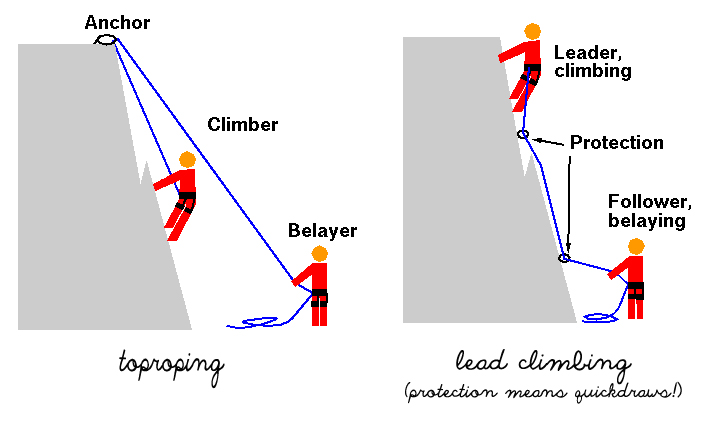
With this toproping certificate you're allowed to climb indoor on your own (without guidance from an instructor or whatsoever). The rope already hangs down for you, all you need to do is bind it to your harness, bind the other end to your belaying partner, and start climbing. There are different routes to climb, starting with 3's and 4's, 4+ and then proceeding to 5a, 5b, 5c, 6a, 6b, etc...until about 9b (I believe! New routes are explored and climbed, when they are harder than any other that's done before, they will get an even higher grade). Mark and I followed our 4-lessons indoor toproping course in another Mountain Network hall. This organization is truly awesome, every hall seems to have great, enthusiastic and responsible personnel, eager to learn you everything about their passion and spread the love for climbing. The halls are modern and synoptic, with clear routes built by good route builders. And they have very good after-climbing beers :)


After receiving our indoor toprope certificate in November 2012, we tried to climb as much as possible, at least once or twice a week. We proceeded slowly from 5a's to 5c's and even 6a's. We discovered bouldering, a different branch in the climbing world in which you try to climb short routes. These routes are not higher than about 3 or 4 meters and have a crash pad beneath them, so belaying is not necessary. Bút, the routes are often quite intense. Whereas a toprope route might contain a few difficult passes among a lot of more doable steps (the difficulty here is found in the length of the routes, which requires a certain endurance), these passes are all collected together in one short boulder. So boulders can actually be seen as a shortened, intensified form of climbing. A lot of climbing halls have a small bouldering room, but Mark and I also discovered two great specialized bouldering halls in the Netherlands with an awesome circuit of boulders varying in difficulty. We discovered that bouldering goes together with a lot of muscle aching, but also with quick progression in the strength, coordination and balance required for our normal climbing!

Bouldering hall 'Delfts Bleau' (not my pic)


During spring this year, we decided it was time for lead climbing. Lead climbing differs from toproping and is also a bit more scary/risky. Instead of climbing on a rope that already hangs down the wall, you take the rope up with you, clipping it to metal rings in the wall via so-called quick-draws. This means that you will fall a longer distance (for example: when you fall just below the next metal ring, you will fall twice the distance to the former ring). The belayer has to gíve you rope instead of taking it in as he or she has to do with toproping. Your belaying partner also has to stay super alert with falls, trying to make the climber's fall not too static, but neither letting the climber hit the ground!
Lead climbing  is actually a necessary step when you want to climb outside. Ropes don't grow on rocks, you know :P We followed this 4 lessons course at Mountain Network Amsterdam, the hall that has the best lead climbing wall in the Netherlands (in our honest opinions at least...it's also often used for championships!).


The next video shows the differences between a toproping fall and a lead climbing fall (you can start at 30 seconds).


Now if you'd like to see how this can escalate in real hard rock climbing, click here... Don't worry, these are quite extreme examples (but still, dad: please don't watch this). You can also see the impact of a big fall on the belayer, who is being pulled upwards (or actually towards the first quickdraw).

Again a lot of practice followed after gaining our indoor lead climbing certificates. Toproping, lead climbing and bouldering as much as we could, I started to try 6b's and Mark even did some 6c's. The progression made us grow even fonder of our new found passion, maybe we actually got a bit addicted! We bought gear, starting with our own harnesses and shoes, belaying devices, carabiners, etc.  (And let's not forget the super fashionable climbing leggings I bought at ebay...) During the last months we also got our own 70 meter rope, quickdraws, lifelines, slings, prusik cords and helmets. I even sew my own chalk bag (holding magnesium chalk to powder your fingers during the climb). These were the necessary items for our ultimate goal: climbing outside!


Yup, our most recent course took place at the Mountain Network outdoor centre in the Ardennes! Two weekends were spent in the Dinant region, resulting in our outdoor lead climbing certificate. We had the most awesome days under the guidance of some great instructors who know an awful lot about climbing. The weather couldn't be better, neither could be the Belgian beers at the end of the intense days. We slept in tents at the campsite next to the Mountain Network office and bar, located in an old farm/castle building. We learnt how to climb multipitch at Freyr (see the pic), which means you climb several lengths of your rope (so you can climb a lot higher!). We did some abseiling and were taught several knots and other rope techniques. It was quite a lot to take in, I still have to let it al sink in and probably read it over in the little information booklet we got. The best we can do now again is practice, practice and practice even more. And now we got all the gear ánd licenses to climb outdoors independent, there's nothing that can stop us!

We climbed on that rock on the right...looking out over the
river (the 'Maas' and the castle on the other side!)


So...that's my small climbing history so far. The birth of a passion that has brought me much joy already in such a short time. It lets me discover my physical and mental abilities and boundaries, making me push my limits and always (literally) reach for that next hold. The climbing community is kind and social, not too big or pretentious. I climbed next to the Dutch lead climbing champion one sunday afternoon...she was just practicing, as were we! My experience with outdoor climbing so far is small, but holds a lot of promises. Being in nature while climbing, touching the rock to find a good hold, feeling the sun and the wind on your back and admiring the view once you're above the trees...I can't wait to go again. I'd love to share more of my climbing adventures here on my blog, as a little climbing diary. Don't know if anyone's interested in these stories...but hopefully this post cleared things up a bit about what I have been doing on the walls the last months.


Ps. If you're interested in climbing and you're a girl, you might like www.cruxcrush.com... an awesome climbing blog by and for girls!

Yours truly, Miss Monkey :)

Follow me!